

Table of Contents
The decision behind steel plate diagonal tolerance
For an order involving steel plate diagonal tolerance, a clear technical handover matters. Use diagonal measurements together with edge straightness and specified length and width. Equal diagonals alone do not prove that all corners and edges satisfy the required geometry. This guide explains what to put in the inquiry, what to check before release and which records make the delivery reviewable.
Define the supplied material and condition
Specify the actual steel grade and delivery condition required by the drawing. Carbon steel, marine plate, coil feedstock and precision tube are different product choices even when they share a similar appearance. This article addresses a procurement decision; it does not assign structural capacity, pressure rating or classification approval to an unspecified product. Ask for the relevant order documentation rather than inferring compliance from a catalogue description.
Separate a material requirement from a fabrication service. Cutting, beveling, rolling, machining and testing may be requested, but each operation needs confirmed scope, acceptance and availability. The quotation should make that scope explicit. Keep any proposed change in product form or process visible for the purchaser’s technical review before production begins.
The material certificate and dimensional report answer different questions. The certificate identifies the batch and reports the specified material tests. The dimensional report records the inspected geometry. Keep both connected to the delivered plate or part. A satisfactory document in one category does not close an unresolved requirement in the other.
Choose the evidence that closes the requirement
For steel plate diagonal tolerance, the starting evidence is a measurement sketch showing reference edges, diagonal readings and the agreed squareness method. Link it to the actual drawing revision and supplied batch. If an item is missing, ask a specific question before treating the offer as complete.
Estimate mass from consistent dimensions and a stated density assumption. Convert all dimensions to one unit system before calculating volume. Use the result for planning only unless the contract explicitly adopts theoretical mass for settlement. Actual thickness variation, cutouts, coatings and packing can explain differences between a nominal calculation and the scale reading.
Compare three ways to place the order
The comparison below concerns steel plate diagonal tolerance. It compares purchasing scope and evidence rather than claiming that one material grade is universally superior. Select the route that closes the requirement stated by the buyer.
Use a simple sketch to prevent diagonal labels being reversed. Mark the same corners on the plate and inspection form, and record the support condition if it affects measurement. If one diagonal differs, investigate the edge and corner geometry rather than immediately trimming the shortest side. The required correction depends on the controlled datum and the usable envelope needed by the next operation.
| Order approach | Buyer supplies | What remains to verify |
|---|---|---|
| Stock-material order | Carbon Steel Plate grade, size and condition | Corner reference and any downstream preparation |
| Prepared supply scope | Controlled drawing plus diagonal readings | Included operations, inspection stage and usable quantity |
| Trial or project-reviewed supply | A measurement sketch showing reference edges, diagonal readings and the agreed squareness method | Representative trial and written deviation approval |
Inspection checks for steel plate diagonal tolerance
Measure both diagonals from consistently defined corner points. Also inspect the reference edges because a bowed edge can complicate an apparently simple diagonal check. Record length and width beside the diagonal results. For irregular blanks, use the drawing’s actual datum and coordinate requirements rather than a rectangular shortcut.
The parent plate identity should remain connected to its cut parts. A practical system links the heat or batch record to the nesting plan, then assigns part marks before pieces leave the cutting area. Remnants need their own controlled identification. An invoice identifying the parent plate does not automatically identify loose blanks delivered later in an unmarked bundle.
Substitution requires a review of the complete requirement. Compare the product standard, grade, delivery condition, dimensions, inspection obligations and intended fabrication route. Similar strength values or a familiar trade description do not settle the question. Record the proposed difference and obtain the purchaser’s written technical decision before replacing the specified material.
A practical purchasing example
Consider this illustrative situation: A rectangular blank fits the stated length and width but does not sit square in the welding fixture. Check the datums and diagonals before trimming. This is a decision example, not a claimed customer case or a measured project result.
The first action is to make the uncertainty explicit: use diagonal measurements together with edge straightness and specified length and width. Put the affected requirement on the drawing or order review. Ask for a measurement sketch showing reference edges, diagonal readings and the agreed squareness method, and identify who can approve any deviation. This keeps the commercial decision tied to the feature that controls use.
Information to include in the quotation request
A useful inquiry for steel plate diagonal tolerance identifies the required product form, material designation, dimensions, quantity basis and the operation that follows delivery. Attach the controlled drawing where geometry matters. State the inspection requirement and distinguish included work from optional services.
Ask the offer to address corner reference explicitly. Give diagonal readings its own requirement or review question, then identify how edge straightness will be closed. If the supplier proposes a different basis, preserve that proposal beside the original requirement. This makes the buyer’s approval specific enough to guide receiving inspection.
List these topic-specific checkpoints separately: corner reference, diagonal readings, edge straightness. For each checkpoint, provide the applicable requirement or ask the supplier to state a proposed method for review. Do not silently turn an unspecified value into a supplier guarantee.
Trial, packing and receiving handover
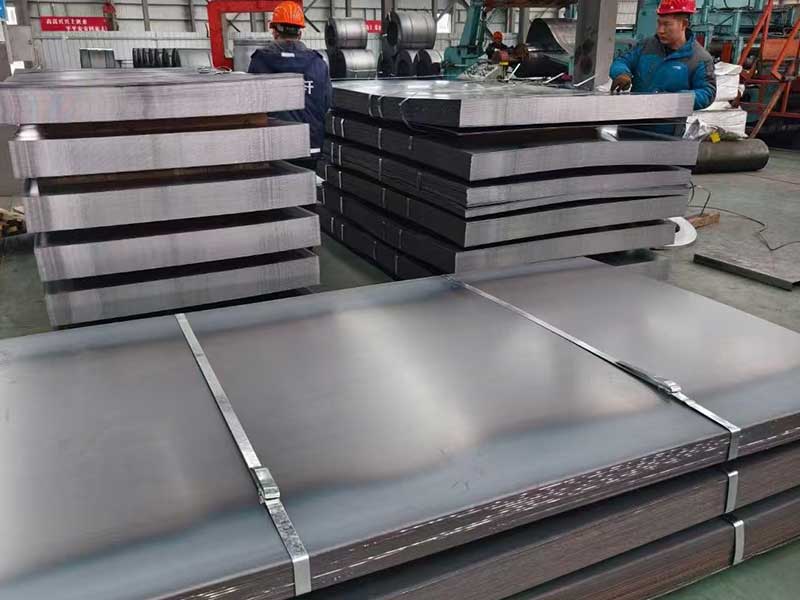
Flatness should be assessed under the agreed support conditions. A plate held down by clamps can appear satisfactory while its free-state shape differs. Explain whether the component will be welded into an assembly, bolted to a frame or machined into a fixture. The functional requirement helps the buyer choose a useful inspection method and prevents a temporary handling condition from becoming the acceptance test.
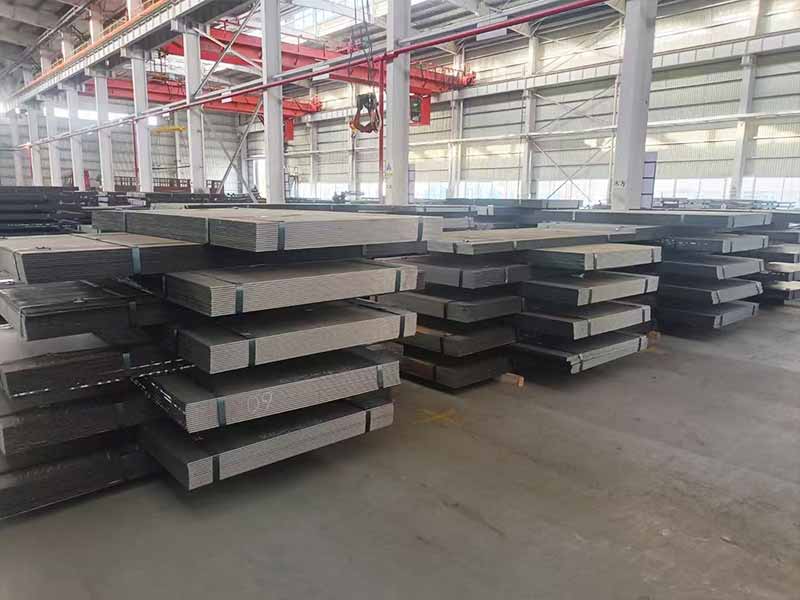
At the handover, connect the physical carbon steel plate supply to the requirement discussed here. The receiving team needs to know the importance of corner reference, the agreed treatment of diagonal readings and the release basis for edge straightness. Keep the original material identity and the relevant evidence together. If that link is incomplete, identify the gap before the material enters the next operation.
Document the handover between purchasing and production. The workshop needs the applicable drawing, material identity, supplied condition and any special handling or inspection instruction. An invoice and a delivery date do not communicate all of that. A short controlled handover avoids relying on a verbal explanation from the person who placed the order.
Resolve deviations before production release
Inspection timing affects what can still be corrected economically. Check material identity before cutting, critical dimensions before finishing and the required final condition before packing. A late inspection may discover a recoverable problem only after the identifying marks or machining allowance have been removed. Agree the inspection sequence with the fabrication route rather than using one final visual check for everything.
The central risk remains clear: equal diagonals alone do not prove that all corners and edges satisfy the required geometry. A deviation affecting that risk needs an explicit disposition. Accept, rework, replace or revise the requirement only through the agreed technical and commercial route. Keep the decision with the batch record so the same question does not return at installation.
Reference: ASTM steel product standards.
Discuss the actual supply scope
Review the listed carbon steel plate product and the steel plate & coil & pipe & round steel range when preparing the inquiry. Availability, additional processing and special tests need confirmation for the actual order. The service page describes consultation and delivery support.
To discuss steel plate diagonal tolerance, send the drawing revision, material requirement, quantity and desired delivery location through the inquiry form below. Include the critical checkpoint and the evidence you expect before release. A precise requirement makes it easier to receive comparable offers and a usable delivery plan.
Frequently asked questions
What is the first step when specifying steel plate diagonal tolerance?
Use diagonal measurements together with edge straightness and specified length and width. Put the requirement into the controlled inquiry and identify the record used for acceptance.
Which records matter for steel plate diagonal tolerance?
A measurement sketch showing reference edges, diagonal readings and the agreed squareness method. They should identify the delivered batch and the applicable drawing or specification.
Can a photograph replace the inspection report?
A photograph can show visible form and condition. It cannot establish every dimension, alloy identity, material property or application approval. Use the agreed inspection evidence for the characteristic being accepted.
Should a lower quotation be accepted immediately?
Compare the same supplied condition, processing scope and inspection basis first. For this order, review corner reference and edge straightness before deciding whether the offers are equivalent.
What information helps the supplier respond accurately?
Provide the product form, material designation, controlled drawing, quantity and intended next operation. Include the steel plate diagonal tolerance requirement and ask the supplier to list deviations and confirm the offered scope.
 English
 Korean
 Arabic
 Vietnamese